Rear-End Collision Fault in Florida: What the 2026 Law Really Says

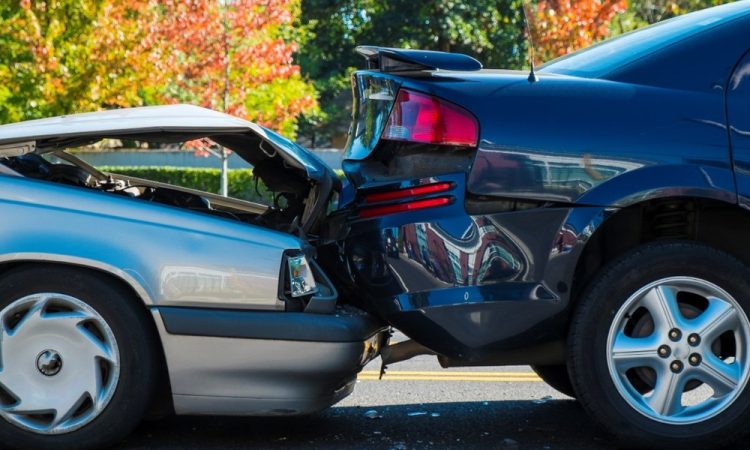
The process of determining who is responsible in a rear-end collision not as straightforward in the way that some believe “rear driver will always be right” myth claims, particularly in the context of Florida’s 2026 laws on traffic. Although there is a legal basis in these cases but the reality of St. Petersburg roads often includes sudden stops as well as illegal cut-offs. mechanical issues which shift the responsibility.
In the Law Office of Jeanette J. Secor, P.A. Our mission is to make sure your case gets “Won and over.” We go beyond an initial statement of the police officer to determine the truth behind the report, and ensure that the correct party is accountable for medical bills and car repairs.
Key Takeaways
- Presumption is not the same as. Evidence: Florida law starts with the concept of “rebuttable presumed” that the driver behind is in a negligent manner. The law is an legal obstacle to be overcome, but not a decision on your case.
- Lead Driver’s Liability A fault can occur if the driver in front stops randomly, fails to function brake light, or participates in an “brake test.” These kinds of actions can render the driver in charge of the primary responsibility.
- Five1% rule: As per Florida’s modified standard of comparative negligence in 2026, you must be at least 50% in the fault line to claim. A precise way to prove that the negligence of another driver is more crucial than ever before.
- Technical Evidence The black box data and dash cams offer the truthful “truth” to an injury. Utilizing a pilot-like, technical method to prove the truth, it can disprove fraudulent insurance claims.
Understanding Who Is at Fault in a Rear-End Collision
According to law, all drivers have an obligation to keep an adequate distance of following. In the event of a crash, Florida courts apply a “rebuttable presumption of negligence” against the driver who was rear-ended. The law presumes you were not following closely enough or distracted, unless you give an “substantial sufficient and believable” reason for the crash.
To challenge this assumption to counter this, we seek “rebutting proof.” For instance, if a driver’s lead makes an “arbitrary and unplanned” stop in a spot in which a stop is not required (like the green light of the bridge) the driver has violated their obligation of care. In such cases the driver in charge could be held partly or fully accountable for the collision that resulted.
The “Sudden Stop” Defense: When the Front Driver Is Liable
An “sudden stop” by itself is not often enough to change fault. Florida law requires the stop to be sudden and unexpected.
- Expected Stops: Having to stop for an red light, pedestrian walking in a crosswalk or an unending traffic line is considered “expected.” If the stopping was abrupt, the driver behind is generally held responsible for not allowing enough room.
- Unexpected Stops: Using the brakes without a clear traffic-related reason, like on the highway at high speed, or even during an “green” signal that has an unobstructed road ahead can disprove the presumption of carelessness. This is usually the case when “road anger” or the deliberate “brake checking” can be a factor.
Brake Checking and Road Rage in 2026
“Brake checking”–the practice of purposefully applying the brakes in order to shock or “punish” an offending driver is an increasing problem on Florida’s overcrowded interstates. There isn’t an independent “brake check” law,” this behavior falls under the category of reckless or aggressive driving.
Conducting a brake test requires the detection of signs of intent. Did the driver in front of you show a frenzied gesture before hitting? Did they shift lanes to pass ahead of you prior to stopping? We are looking for evidence that is neutral like dashcam video and witnesses’ statements to show that the driver who was in charge used their vehicle to smuggle in weapons shifts all the blame to them.
Chain Reaction Crashes: The “Middle Car” Problem
In a pileup involving multiple cars the task of determining who is responsible when a rear-end crash occurs is an exercise in the sequence.
- The First Strike: Usually the driver who caused the initial collision is responsible for the resulting “domino result.”
- “Pushed” driver “Pushed” Driver If you were stuck behind a vehicle and you were forced into it by being struck by a vehicle from behind, you’re typically not the cause of the damage caused to the vehicle that was in front of you.
- Gap Liability: If were not following closely enough and struck the car ahead before being struck from behind and you were hit from behind, you could share the responsibility for front-end damages.
The Impact of Florida’s 51% Rule
The legal responsibilities for Florida drivers will be higher than they’ve ever been. Florida is now operating under the Modified comparative Negligence system. This law stipulates that if someone finds more than 50% responsible to their own injury they are unable to recover any kind of compensation.
Since the law begins with the driver behind Insurance companies will struggle to keep your blame percentage over the 51 percent threshold. We have a “Won and Over” approach is based on using a thorough investigation to lower that percentage. If we can prove that the lead driver’s brake light was off or shut you down, we will obtain the settlement you require.
Proving a Defect with “Black Box” Technology
Being a professional pilot that built my own plane I am aware that data isn’t a betray. Modern vehicles are usually equipped with an Event Data Recorder (EDR), or “black box.” The device records crucial information points within the seconds before an accident:
- Applications of Brakes: In what moment when the driver applied the brakes.
- Speed and Velocity: If the car was speeding up or coasting, it was slowing down.
- Steering Input: If your driver in the lead abruptly swerved into your lanes before stopping.
This data type is the most effective method of determining who’s responsible in rear-end collisions. If the driver who is in charge says that they stopped for the light however the evidence shows that they acted in a different manner and erratically, it is clear that the “presumption” for you is gone.
Conclusion: Determining Who Is at Fault in a Rear-End Collision
Finding out who’s at fault in a rear-end collision needs an advocate who can comprehend the legal system and the mechanics behind an accident. There is no reason to be forced to shoulder the cost of an accident that was caused by who is reckless or has faulty equipment. In our firm, the Law Office of Jeanette J. Secor, P.A. we employ 30 years of experience as well as an eye for details that’s a pilot’s to disprove your insurance provider’s claims, and get your life back in the right direction.
Frequently Asked Questions
Do I have a chance to succeed in court when I hit someone from behind?
Yes. When the driver who was at fault for your accident is greater than 50 percent at fault as a result of an unlawful maneuver or unjustified stop, you may still seek a settlement under Florida’s modified law of comparative negligence.
What is what is a “rebuttable assumption”?
It’s an assumption in law that is valid until it is rebutted by evidence. In cases involving rear-end collisions, law presumes that the driver behind is responsible until there is evidence that proves the lead driver’s actions led to the crash.
What is the impact of the “brake check” impact the liability of a driver?
Slamming the brakes with intent to “teach someone an important instruction” is considered to be reckless driver in Florida. If the incident is proven, the leading driver could be held completely responsible for the collision.
Does my PIP cover me if I am at fault?
Yes. Florida is an “No-Fault” state when it comes to medical benefits. Your PIP insurance pays 80percent of the medical bills (up up to a maximum of 10,000) without regard to fault providing you get treatment within 14 days.
This post was written by a professional at Jeanette Secor, PA Attorney At Law.
For over 20 years, the law office of Jeanette Secor, PA in St. Petersburg, FL, has been the go-to choice for those seeking justice after an st pete car accident lawyer. Renowned as the best attorney for slip and falls, Jeanette Secor has a proven track record of successfully representing clients in car accidents, motorcycle accidents, and slip-and-fall incidents.